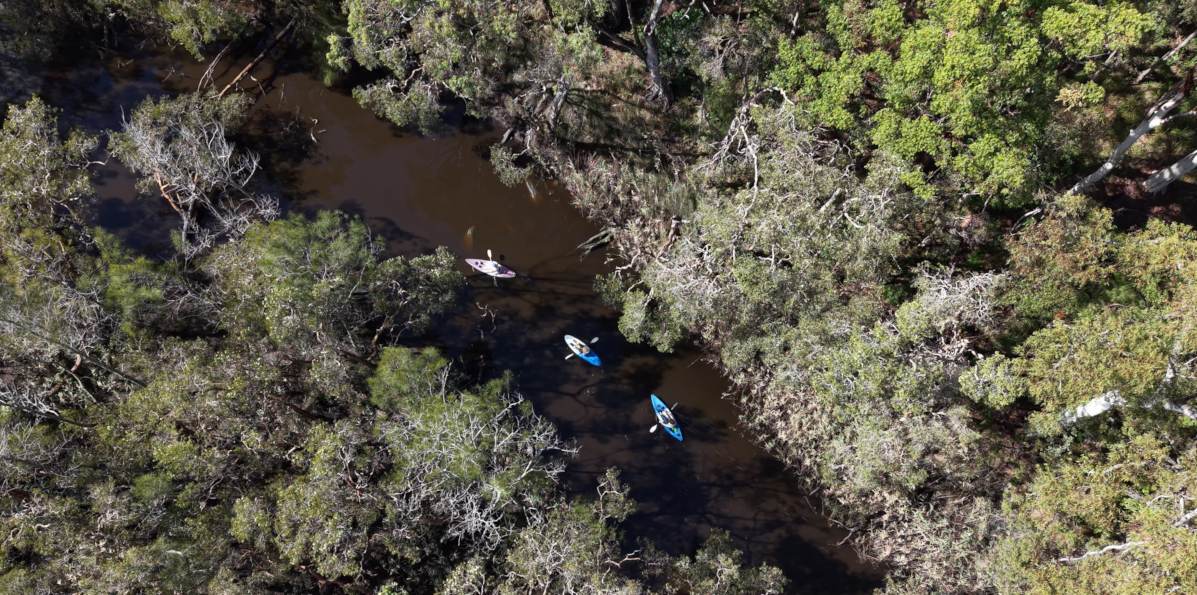
When we think about healthy wetlands, we often picture dynamic estuaries, vibrant mangrove forests and vast floodplain ecosystems teeming with life. But the story starts far upstream, in our humble riparian zones, the strips of vegetation that run alongside our creeks and rivers, following our catchments all the way to the coast.
Riparian zones are ecological powerhouses. They filter sediments, absorb nutrients and slow down runoff before it reaches our rivers, wetlands and estuaries. Healthy riparian buffers protect from erosion, provide shade that keeps water cool for fish, and offer critical habitat for birds, amphibians and insects. They are the living green bridges connecting land to sea.
Unfortunately, these vital zones are under constant pressure in NSW. Since 2012, changes to land-clearing rules and water management have created a patchwork of exemptions and loopholes that allow clearing, grazing and development up to the water’s edge, often with little to no oversight. This weakening of regulations continues to undermine previous legislation that better protected these vital ecosystems.
As a result, riverbanks are collapsing, muddy runoff chokes fish habitat, and nutrient loads fuel algal blooms that suffocate wetlands downstream and result in increasingly frequent and devastating fish kills. This loss of healthy riparian corridors is having profound impacts on communities and nature alike.
If we’re serious about protecting our coastal wetlands and fisheries, we must start at the source. That means bringing back strong riparian zone protections, closing loopholes that prioritise development over conservation, and supporting landholders to fence, revegetate and manage these green buffers as the vital ecosystem assets they are.
Words by Asey Bremner.