Protect NSW from toxic pesticides
When you reach for fresh fruit and vegetables in the supermarket, you expect them to be safe. But too many are grown using toxic chemicals that are linked to cancer, infertility, developmental disorders in children, and degenerative diseases like Parkinson’s and Alzheimer’s. These chemicals don’t just stay on the produce — they often leach into soils, rivers, drinking water and wetlands. They’re threatening our health and our natural ecosystems.
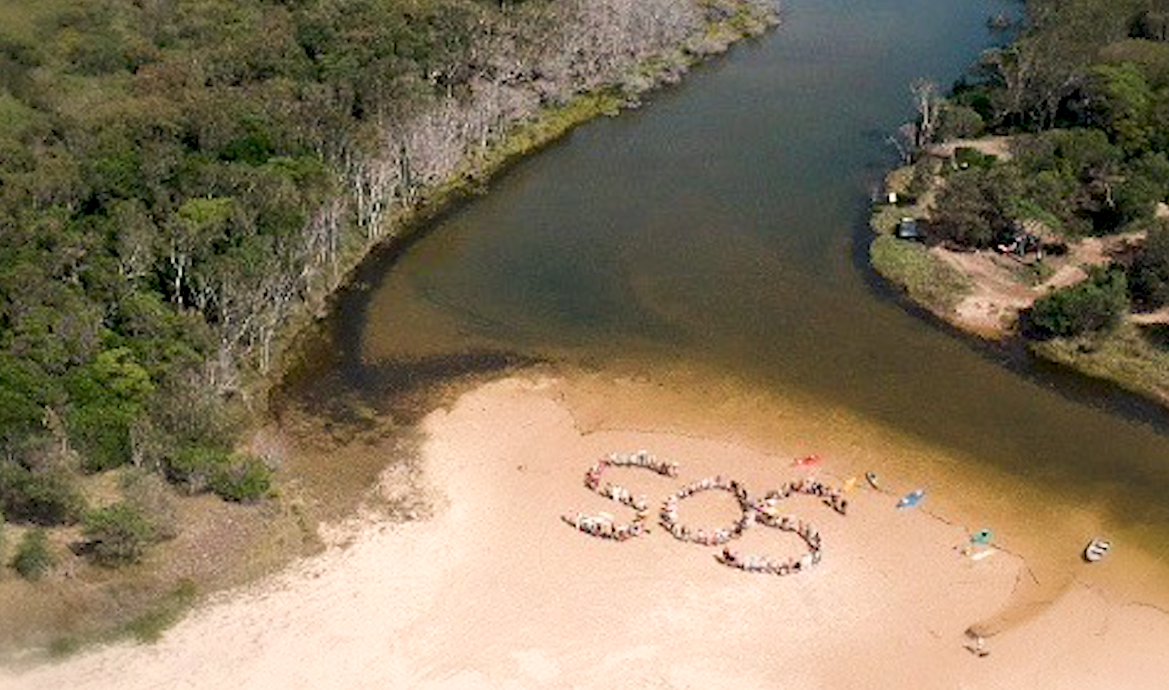
In areas like Hearnes Lake, near Woolgoolga in NSW, water tests have revealed a cocktail of more than a dozen toxic chemicals illegally running off horticultural farms into neighbouring conservation lands and homes.
When our team visited Hearnes Lake, there were no insects, no fish — just a lone, dying egret. A public conservation zone had been muted into near-dead.

Locals gather to make a human ‘SOS’ sign at pesticide-poisoned Hearnes Lake, Woolgoolga.
Click here to watch our video from our visit to Hearnes Lake in 2024.
From inland cotton regions to oyster farms on the South Coast — communities across NSW are being impacted by pesticide drift, chemical seepage into water tanks and soil contamination. The people most at risk include children, farm workers and neighbours who have no say in what’s sprayed next door.
Now there’s a further warning sign: the regulator Australian Pesticides and Veterinary Medicines Authority (APVMA) has suspended the use of dimethoate in berries — meaning growers must now wait 14 days between spraying and harvesting due to concerns about safe exposure limits.
While most developments in NSW require public consultation and environmental assessments, intensive horticulture does not. Local councils, environment groups and neighbors are unable to have a say - even when their water, air and health are on the line.
In 2024, Nambucca Valley locals tried to change that, successfully advocating for a common-sense solution accepted by their local council: require development applications (DAs) for large horticultural operations, so they can mandate protective measures like buffer zones and give locals a voice. Yet, the NSW Government rejected the request.
We deserve better. We deserve clean water, safely produced food, and protection from known carcinogens.
We call on NSW Minister for Planning and Public Spaces, the Hon. Paul Scully, to amend relevant State Environment Planning Policies (SEPPs), the Standard Instrument (Local Environmental Plans) Order 2006, and Environmental Planning and Assessment Regulation 2021, as to:
- Enforce minimum standards for horticultural developments, such as mandatory vegetation buffers, to better contain chemical drift and runoff into neighbouring properties and ecosystems.
-
Require mandatory development application (DAs) for new and modified horticultural operations in RU1, RU2, and RU4 zoned land.